If you've got a dollar and you spend twenty-nine cents on a loaf of bread, you've got seventy-one cents left. But if you've got seventeen grand and you spend twenty-nine cents on a loaf of bread, you've still got seventeen grand. There's a math lesson for you.
~Steve Martin, Comedian and writer
Thursday, June 15, 2006
Food for Thought
This was the quote on my Starbucks cup this morning. Thought you might find it as interesting as I did:


Monday, June 12, 2006
Why so much hate?

In my mind, racism has always been a U.S. problem. We have such a negative history with different ethnic groups--taking away the land of Native Americans, bringing Africans to enslave them, taking land from Mexico, using water hoses, lynching and physical abuse on African-Americans, and subjecting the Japanese in internment camps. Though, in some ways, we have made some steps forward, we seem to be slipping backward in many ways as well.
I'm finding out that racism isn't solely an American problem. Not to long ago, a friend of mine told me about the racism that also goes on in Europe, mainly targeted toward Black soccer players--to the point of the crowd yelling monkey chants and throwing bananas and peanuts at the players. There has also become a strong anti-immigration sentiment as well. With the World Cup going on, the racism is getting a little more publicity. I'm not sure whether Europeans are mimicking our issues in the United States or simply creating their own hate. I can't figure out what prompts people to hate others just because they have a darker color of skin. The irony is that this is taking place in Germany! You would think Germans would be much more sensitive to race and immigration issues because of their past!
At the initiation of some of the players, Nike has begun a campaign against the racism called Stand Up, Speak Up. For more information on the campaign, go to www.standupspeakup.com. Nike has created two interlocking armbands--one black, one white--saying Stand Up, Speak Up so that people in the stands and players have a way of saying they don't agree with the racist practices without having to deal with the confrontation.
Even though I think people with such overt racist attitudes need to be confronted, sometimes it's good to make the statement without ever saying a word. One researcher I've read talks about the "White Racial Bonding" that happens between White people where they make a derogatory statement about another group to create that bonding between them. (ex: "Can you believe how the neighborhood has gone downhill? It used to be so nice before." ...referring to other racial/ethnic groups that have now moved into the neighborhood). We all need to stand up and speak up. Overt racism is not only in Europe. It's in the United States, too. Our silence on the issue implies agreement. Speak up.
Check the website out. Watch the TV commercial. Powerful stuff.
Sunday, June 11, 2006
Behind the Scenes

I've been watching the NBA playoffs. I love watching the Mavs play. I don't know much about the strategic plays of the game; I watch simply for enjoyment. My mind just doesn't work in a way that sees plays and looks for strategy. (I have attempted to coach a Rangers Rookie League 4th and 5th grade baseball team in the past. After that I gained a whole lot more respect for coaches and their abilities to pull a team together!)
Avery Johnson (head coach of the Mavs) has that strategic mind. I am very impressed with how he utilizes his team. His strategy seems to be different than most. Instead of putting all of his time and energy into one group of five, he develops his whole team, realizing that the players on the bench are just as vital to the game as the starting line-up. Although injuries to key players always affect a team, Avery takes injuries in stride. He is constantly switching his line-up, readjusting his strategy depending on the team they're playing, and his team doesn't usually miss a beat.
Of course, there are always going to be the main people who receive the bulk of recognition. On the Mavs, it's all about Dirk. But the truth is, if Dirk didn't have Terry, Dampier, Stackhouse, and some of the others, the team wouldn't win. It takes the shooters to win a game. But if we didn't have rebounders and blockers we wouldn't win either. Their contributions are often overshadowed by the very visible points that go on the board when someone makes a shot.
Life is like that. There are those of us who are in the "spotlight" because what we do is apparent. But there are so many other people who are blocking and rebounding. Without all of us working together, none of us would succeed.
Here are the blockers and rebounders in my life:
I could go on and on. Most of the people I've mentioned are content being the rebounders and blockers. They definitely don't get the recognition they deserve. But the truth of the matter is, the "team" couldn't exist without them.Any number of teenagers who have made the decision to stay in school when no one at home tells him/her to or even encourages him/her.
Parents who provide meals for their children on a minimum wage salary.
My neighbor Gino, who is more than willing to help me fix my lawn mower, my gate, or anything else I need.
My friend Juan Carlos, who always comes to my aid when my computer is down.
Robert, who I've witnessed helping a random stranger at Wal-mart as they tried to fit something they purchased into their too small trunk.
Lorenzo, who delivered a grill to my house, cooked the links and hotdogs for the party last week (on a hot evening!), and then came back to take the grill back to it's rightful owner, though I know he's exhausted from working, taking care of four girls at home, and then doing so much for other people.
Roy, who loaned the grill.
Tom, who has let me borrow his car while mine's in the shop.
Rachel bringing the teenagers to speak to my graduate class.
Gary, who is always available when I need a favor.
Saturday, June 10, 2006
Revealing truth about our subconscious discrimination
I know race is a very sensitive issue and people would like to deny that it still exists as an obstacle. However, it is always interesting to me when studies are done and when statistics are presented that show the only explanation for the discrimination is the color of someone's skin. Read the article below, from the Washington Post.
The Color of Disaster Assistance
By Richard MorinFriday, June 9, 2006; Page A02
Americans are more willing to provide extended government assistance to white victims of Hurricane Katrina than to African Americans and other minorities -- particularly blacks with darker skin.
Overall, the "penalty" for being black and a Katrina victim amounted to about $1,000, according to the latest online study by The Washington Post, washingtonpost.com and Shanto Iyengar, director of the Political Communication Lab at Stanford University.
More than 2,300 individuals participated in the latest experiment, which tested how much subconscious racial bias shapes attitudes toward disaster relief. Participants went to a Web site that featured a brief news article about the effect of the hurricane. A photo of an individual featured in the story accompanied the article.
But here's the trick: The race, gender and occupation of the featured person varied. Some participants read an article about a flood victim named Terry Miller who was depicted in the photo as a black man; others read the same item, except the Terry Miller in the photo was a white man, while in others, Terry became a black or a white woman. (The Latino victim was named Terry Medina.) In some photos, the skin tone of the person was darker; in others, it was lighter.
After reading the article, participants were asked to indicate how much government aid hurricane victims should get for housing and general living expenses. For each type of assistance, participants could give from $200 to $1,200 per month, and from a minimum of three months to a maximum of 18 months.
If race mattered, there would be a difference in the level of assistance favored by respondents who read an article about the white Terry Miller and the assistance favored by those who read about a black Terry Miller.
There was. People were willing to give assistance to a white victim, on average, for about 12 months. But for an African American victim, the average duration was a month shorter while the amount of aid was nearly the same, meaning that blacks would collect about $1,000 less than white victims.
Skin tone also mattered. A darker-skinned black received about $100 a month less over a shorter period of time than a light-skinned white, all other factors being equal -- a huge effect. Content of the articles also made a difference: Participants were the least generous after reading one article on looting.
"These results suggest that news media coverage of natural disasters can shape the audience's response," Iyengar said. "Framing the disaster in ways that evoke racial stereotypes can make people less supportive of large-scale relief efforts. News reports about flooding evoke one set of apparently positive images in the reader's mind; reports about lawlessness evoke quite another."
Read a complete analysis of the results of the experiment.
The Color of Disaster Assistance
By Richard MorinFriday, June 9, 2006; Page A02
Americans are more willing to provide extended government assistance to white victims of Hurricane Katrina than to African Americans and other minorities -- particularly blacks with darker skin.
Overall, the "penalty" for being black and a Katrina victim amounted to about $1,000, according to the latest online study by The Washington Post, washingtonpost.com and Shanto Iyengar, director of the Political Communication Lab at Stanford University.
More than 2,300 individuals participated in the latest experiment, which tested how much subconscious racial bias shapes attitudes toward disaster relief. Participants went to a Web site that featured a brief news article about the effect of the hurricane. A photo of an individual featured in the story accompanied the article.
But here's the trick: The race, gender and occupation of the featured person varied. Some participants read an article about a flood victim named Terry Miller who was depicted in the photo as a black man; others read the same item, except the Terry Miller in the photo was a white man, while in others, Terry became a black or a white woman. (The Latino victim was named Terry Medina.) In some photos, the skin tone of the person was darker; in others, it was lighter.
After reading the article, participants were asked to indicate how much government aid hurricane victims should get for housing and general living expenses. For each type of assistance, participants could give from $200 to $1,200 per month, and from a minimum of three months to a maximum of 18 months.
If race mattered, there would be a difference in the level of assistance favored by respondents who read an article about the white Terry Miller and the assistance favored by those who read about a black Terry Miller.
There was. People were willing to give assistance to a white victim, on average, for about 12 months. But for an African American victim, the average duration was a month shorter while the amount of aid was nearly the same, meaning that blacks would collect about $1,000 less than white victims.
Skin tone also mattered. A darker-skinned black received about $100 a month less over a shorter period of time than a light-skinned white, all other factors being equal -- a huge effect. Content of the articles also made a difference: Participants were the least generous after reading one article on looting.
"These results suggest that news media coverage of natural disasters can shape the audience's response," Iyengar said. "Framing the disaster in ways that evoke racial stereotypes can make people less supportive of large-scale relief efforts. News reports about flooding evoke one set of apparently positive images in the reader's mind; reports about lawlessness evoke quite another."
Read a complete analysis of the results of the experiment.
Friday, June 09, 2006
Hearing the Voice of the Community
I mentioned I'm teaching a graduate class of 11 current or future teachers. 10 out of 11 of the teachers teach in predominantly African-American and Hispanic schools. The topic of my class the other night was Stereotyping. As I think through the agendas for each evening, I always think about the stories kids' and parents' have told me through the years. Many of their stories address underlying racism and assumptions that often affect their educational decisions in life. Their experiences are something people need to listen to and really hear--especially teachers who are teaching in these schools.
Because I've seen what happens in the schools I've been in--teachers cussing at kids, hitting kids, encouraging kids to go into the Army because they think that's all the kid will be able to do in life, etc.--I want people (especially teaches) to hear from the people on the receiving end. What are they thinking and feeling when all of this happens? Since I now have the opportunity to connect the voices of the community with the educators, I thought I would do just that. I asked Nazareth, Gary, Whitney, and Tiffany to speak to my class. I was a little hesitant simply because I didn't want to make the assumption that the teachers in my class don't already have quality relationships with their students. However, the result was amazing!
Nazareth, Gary, Whitney, and Tiffany expressed to the group of teachers that their worst experiences and their least favorite teachers were the ones that didn't do anything. They didn't make an effort to teach them and they didn't bother to expect anything from them. They told stories of teachers who didn't care if they skipped class, which they eagerly participated in, but they wished the teacher would've held them accountable and taught them something instead. Their words of advice to the teachers was, "Get to know your kids on a personal level. Ask about them." Build a relationship. Love us even when we're bad. Encourage us despite our attitudes. Help us be successful. Only one of the four had a parent who was willing to be involved in his daughter's education. The other three had parents who attended discipline meetings...mainly because that's the only time they were called...but did not get involved any other way. Despite the lack of parental involvement, the four continued to say, "Build a relationship with us! Our parents probably won't get involved. Talk to us!"
The teachers responded so positively! They listened intently to each of their stories and they asked questions. They seemed to genuinely want to understand the perspective of a student. They seemed a little surprised at how adamant the four speakers were about wanting expectations, encouragement, and relationships. After the speakers left, one of the teachers asked, "Can you bring in some parents, too?" I'm going to work to do that. Teachers need to hear from the students. They need to hear from the families. Hopefully, this class will lead the teachers to begin to get to know the families at their school instead of just relying on the people I bring in.
It always amazes me what can happen when you connect people. The teachers genuinely wanted to hear and understand the perspective of a student. The students (and families) want the teachers to hear them. But, for some reason, we don't work toward that end. We judge what we see and what we hear from others instead of getting to know the other side. The fact that we're different...racially, culturally, socioeconomically, where we live, where we work...should make us more, instead of less, eager to get to know each other. The benefits are more valuable than we realize.
Because I've seen what happens in the schools I've been in--teachers cussing at kids, hitting kids, encouraging kids to go into the Army because they think that's all the kid will be able to do in life, etc.--I want people (especially teaches) to hear from the people on the receiving end. What are they thinking and feeling when all of this happens? Since I now have the opportunity to connect the voices of the community with the educators, I thought I would do just that. I asked Nazareth, Gary, Whitney, and Tiffany to speak to my class. I was a little hesitant simply because I didn't want to make the assumption that the teachers in my class don't already have quality relationships with their students. However, the result was amazing!
Nazareth, Gary, Whitney, and Tiffany expressed to the group of teachers that their worst experiences and their least favorite teachers were the ones that didn't do anything. They didn't make an effort to teach them and they didn't bother to expect anything from them. They told stories of teachers who didn't care if they skipped class, which they eagerly participated in, but they wished the teacher would've held them accountable and taught them something instead. Their words of advice to the teachers was, "Get to know your kids on a personal level. Ask about them." Build a relationship. Love us even when we're bad. Encourage us despite our attitudes. Help us be successful. Only one of the four had a parent who was willing to be involved in his daughter's education. The other three had parents who attended discipline meetings...mainly because that's the only time they were called...but did not get involved any other way. Despite the lack of parental involvement, the four continued to say, "Build a relationship with us! Our parents probably won't get involved. Talk to us!"
The teachers responded so positively! They listened intently to each of their stories and they asked questions. They seemed to genuinely want to understand the perspective of a student. They seemed a little surprised at how adamant the four speakers were about wanting expectations, encouragement, and relationships. After the speakers left, one of the teachers asked, "Can you bring in some parents, too?" I'm going to work to do that. Teachers need to hear from the students. They need to hear from the families. Hopefully, this class will lead the teachers to begin to get to know the families at their school instead of just relying on the people I bring in.
It always amazes me what can happen when you connect people. The teachers genuinely wanted to hear and understand the perspective of a student. The students (and families) want the teachers to hear them. But, for some reason, we don't work toward that end. We judge what we see and what we hear from others instead of getting to know the other side. The fact that we're different...racially, culturally, socioeconomically, where we live, where we work...should make us more, instead of less, eager to get to know each other. The benefits are more valuable than we realize.
Wednesday, June 07, 2006
Acknowledging society's contributors
I taught my first graduate class the other night. It was a Multicultural Education class. Though I would never want to teach a group of teachers reading strategies and classroom management techniques and such, I have always wanted to teach Multicultural Ed.
The class of 11 people was pretty diverse. Out of those 11, 4 are male (2 white, 1 Asian/Indian, 1 Hispanic) and 7 female (2 white, 5 African-American). Four of them teach elementary, 4-5 of them teach high school, and 2-3 are not teaching right now. 10 of the 11 have predominantly African-American and Hispanic students in their classes. The Asian man teaches Humanities in Plano and has an overwhelmingly white class. The diversity of the class is going to add to the richness of perspectives.
Last night as I gave them tasks and assignments that would introduce them to a number of different "unsung heroes" in our history, one of the African-American women made the comment, "I feel dumb." Another African-American woman made a comment that implied she blamed herself for not knowing more about the variety of cultures and names of the people in different cultures who have made major contributions to our society.
Did you know...
Shirley Chisholm, an African-American congresswoman ran for president in the 1970s
Sacajawea, a Native American who aided Lewis and Clark on their expedition
Charles Drew, an African-American man who founded the blood plasma and transfusions
Maria Tallchief, an Osage Indian who was a famous ballerina
Diego Rivera, a Mexican artist
Jose Marti, a Cuban poet
Seiji Ozawa, a famous Japanese-American orchestra conductor
Garrett Morgan, an African-American who invented the stop light
It's interesting to me that if we want to learn about cultures other than the mainstream, White culture, we feel like it's our own responsibility to do that. Yet, from a very young age we are fed a variety of information about White inventors, musicians, politicians, leaders, etc.
I think Stevie Wonder's song, "Black Man," describes it best:
The class of 11 people was pretty diverse. Out of those 11, 4 are male (2 white, 1 Asian/Indian, 1 Hispanic) and 7 female (2 white, 5 African-American). Four of them teach elementary, 4-5 of them teach high school, and 2-3 are not teaching right now. 10 of the 11 have predominantly African-American and Hispanic students in their classes. The Asian man teaches Humanities in Plano and has an overwhelmingly white class. The diversity of the class is going to add to the richness of perspectives.
Last night as I gave them tasks and assignments that would introduce them to a number of different "unsung heroes" in our history, one of the African-American women made the comment, "I feel dumb." Another African-American woman made a comment that implied she blamed herself for not knowing more about the variety of cultures and names of the people in different cultures who have made major contributions to our society.
Did you know...
Shirley Chisholm, an African-American congresswoman ran for president in the 1970s
Sacajawea, a Native American who aided Lewis and Clark on their expedition
Charles Drew, an African-American man who founded the blood plasma and transfusions
Maria Tallchief, an Osage Indian who was a famous ballerina
Diego Rivera, a Mexican artist
Jose Marti, a Cuban poet
Seiji Ozawa, a famous Japanese-American orchestra conductor
Garrett Morgan, an African-American who invented the stop light
It's interesting to me that if we want to learn about cultures other than the mainstream, White culture, we feel like it's our own responsibility to do that. Yet, from a very young age we are fed a variety of information about White inventors, musicians, politicians, leaders, etc.
I think Stevie Wonder's song, "Black Man," describes it best:
"We pledge allegiance all our lives to the magic colors red, blue and white. But we all must be given the liberty that we defend. For with justice not for all men, history will repeat again. It's time we learned this world was made for all men."I would add to his song...this world was not just made for all men, but by all men...and women! I think we would be much better off if we acknowledged that.
Monday, June 05, 2006
Graduation Party
We had our annual graduation party last night at my house. I love the event. It's a reason to get everyone together and everyone gets to acknowledge, celebrate, and offer words of wisdom to the graduates as they enter a new stage of life. As I looked at each of them, I saw a kid who I had helped coach baseball when he was in 5th grade. I saw a beautiful, mature young lady that I've watched grow and mature since she was 4 years old! I saw a guy that everyone absolutely adores now...never even guessing that just about 6 or 7 years ago he was trying to hang with the wrong crowd and terrorize neighborhoods.
My mind was filled with stories of each one of them. They have each grown and matured and are moving to their next stage in life. They have guides surrounding them. Everyone at the party was there to celebrate them. Words of wisdom were offered. Some of the graduates from last year and the year before that were there to offer some advice. These guys are surrounded with a network of support. I know they will do well.
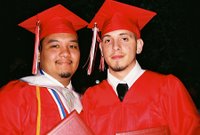 Oscar--graduated from Woodrow Wilson. Is going to University of Texas.
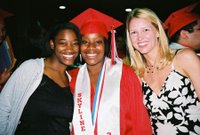 Whitney--graduated from Skyline. Is planning to be a nurse, starting at El Centro.
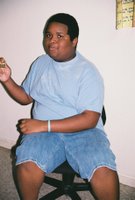 Nick--graduated from W.T. Whyte. Is going to Brookhaven.
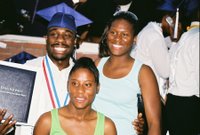 Albert--graduated from Lincoln. Is working on getting into UT Dallas and is planning to be an engineer.
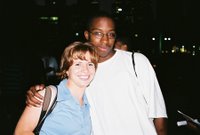 Adrian--graduated from Pegasus. Is planning to be an engineer. Will probably start community college in the fall.
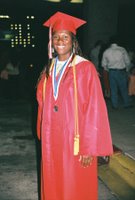 Danielle--graduated from Woodrow Wilson. Is going to a school in Kansas on a basketball scholarship.
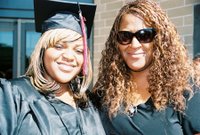 Ronyell--graduated from Hillcrest. Is still deciding what she wants to be, but will attend Eastfield or Richland in the fall.
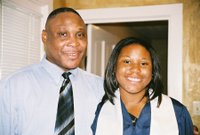
Britney--graduated from Kimball. Will start community college in the fall.
My mind was filled with stories of each one of them. They have each grown and matured and are moving to their next stage in life. They have guides surrounding them. Everyone at the party was there to celebrate them. Words of wisdom were offered. Some of the graduates from last year and the year before that were there to offer some advice. These guys are surrounded with a network of support. I know they will do well.
 Oscar--graduated from Woodrow Wilson. Is going to University of Texas.
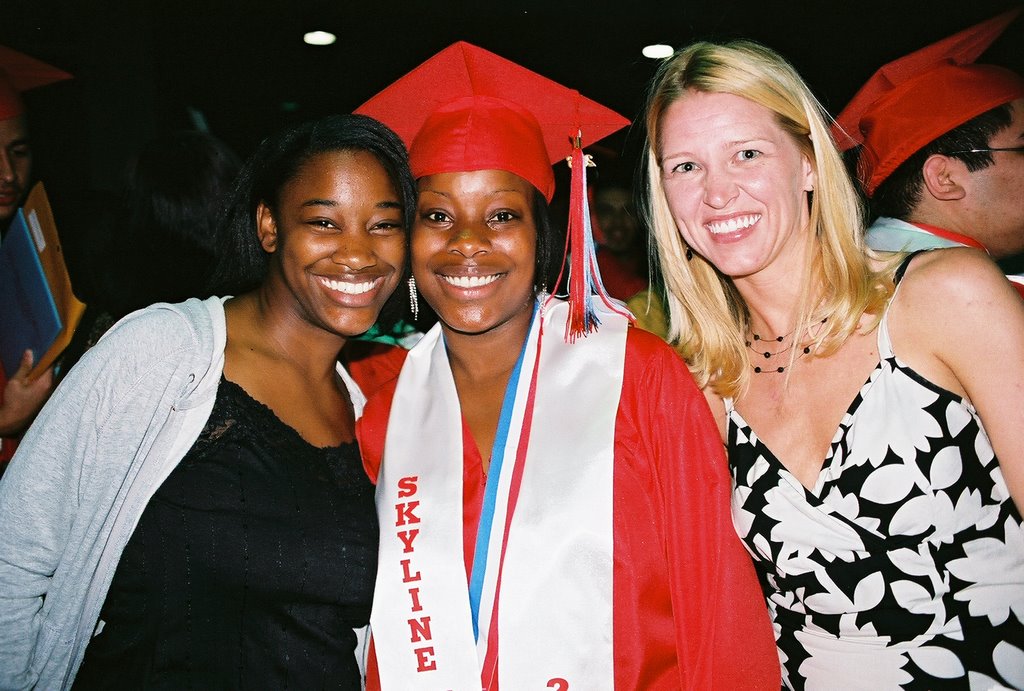 Whitney--graduated from Skyline. Is planning to be a nurse, starting at El Centro.
 Nick--graduated from W.T. Whyte. Is going to Brookhaven.
 Albert--graduated from Lincoln. Is working on getting into UT Dallas and is planning to be an engineer.
 Adrian--graduated from Pegasus. Is planning to be an engineer. Will probably start community college in the fall.
 Danielle--graduated from Woodrow Wilson. Is going to a school in Kansas on a basketball scholarship.
 Ronyell--graduated from Hillcrest. Is still deciding what she wants to be, but will attend Eastfield or Richland in the fall.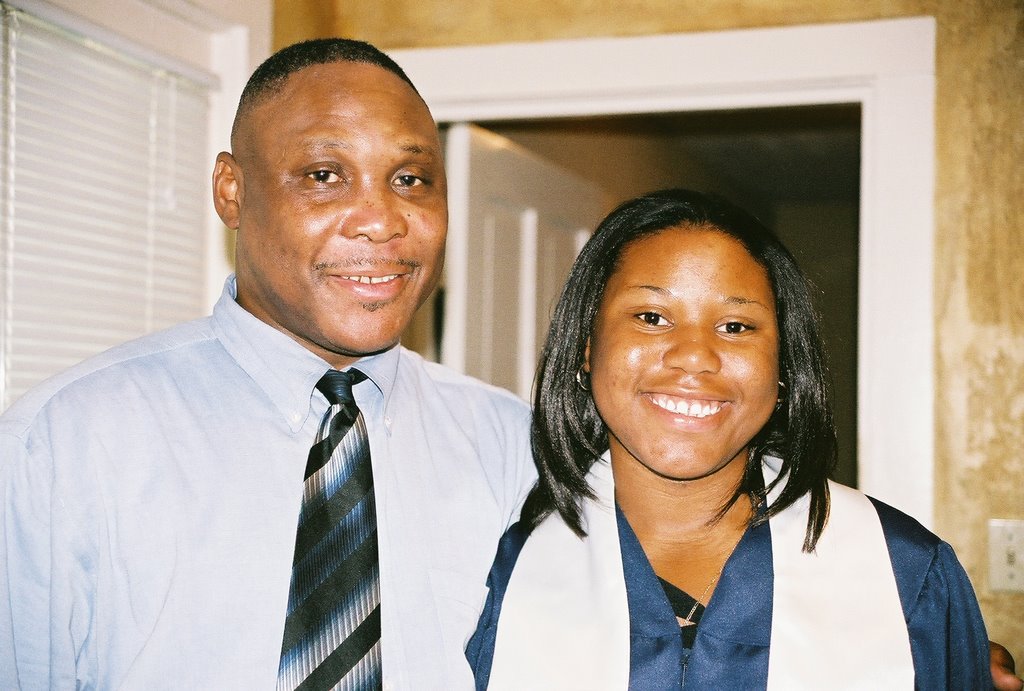
Britney--graduated from Kimball. Will start community college in the fall.
Saturday, June 03, 2006
Knowing our Past, Changing our Future
 I came across some information several years ago that really stunned me. Allow me to quote:
"In Oregon, in 1922, the Ku Klux Klan, which had made the little red schoolhouseIn the article it explains how immigrants who came to this country were forced (against their will) into public schools. A series of Americanization laws (the Bennett Law in Wisconsin was one) were created so that all children would attend public schools, despite the fact that many immigrant groups simply wanted to continue educating their own children and retaining their own culture. The goal of the public schools was to "Americanize" and assimilate immigrants. As a part of that, in the 1890's the Pledge of Allegiance was instituted in the schools in order to "inculcate a common loyalty" (p. 13).
a symbol of Americanism, lobbied successfully for a law mandating that all
children attend public schools" (p. 14). (Tyack, D. B. (1993). Constructing difference: Historical reflections on schooling and social diversity. Teachers College Record, 95(1), 8-34.)
As I read about the origins of our current education system, I began to have a much different outlook on our current practices. The Little Red Schoolhouse icon was a symbol of patriotism that the Klan supported??? The Pledge of Allegiance was a way to force people into allegiance??? There were actually laws that demanded patriotism??? (that actually sounds eerily like today's laws!)
I'm afraid most of us are ignorant to the past. Information like this is not presented in history textbooks. We have to search for it. But I would like to believe if we knew more about our past and knew what we were actually founded on, we might begin to understand our current system and we might begin to recognize how the system has always set certain groups of people at a disadvantage. I would like to think our awareness and knowledge would lead us to change the way we individually and collectively approach our present and future.
As I look into our history from a multicultural perspective, I have found numerous events and happenings that disturb me. I think it is important for all of us to be aware of our past--even the parts of our past that make us uncomfortable. There are truths that have conveniently been left out of our education. If they are not presented to us, we need to seek them out.
I have heard the quote: "Those who cannot learn from history are doomed to repeat it." ~George Santayana. I am afraid we are already going down that path. However, by educating ourselves and passing along our new information, I believe we can begin to turn the tide.
Friday, June 02, 2006
Growing and Changing Population
A friend of mine sent this to me recently. I thought I would pass it along for the statistics, but also in hopes that you or someone you know might volunteer for this. If you're outside of Dallas, I'm sure you could call or email the person below and he could direct you to your local office.
Per a U.S. Census Bureau news release dated May 10, 2006, about 1 in every 3 U.S. residents is now classified as belonging to a racial or ethnic minority. In 2005, the nation's minority population totaled 98 million, or 33%, of the country's total of 296.4 million.
Hispanics continue to be the largest minority group at 42.7 million. With a 3.3% increase in population from July 1, 2004, to July 1, 2005, they are the fastest-growing group. Hispanics accounted for almost half (1.3 million, or 49%) of
the national population growth of 2.8 million between July 1, 2004 to July 1,
2005.
The second largest minority group was blacks (39.7 million), followed by Asians (14.4 million). The population of non-Hispanic whites who indicated no other race totaled 198.4 million in 2005.
A Census Bureau projection showed that the "minority" population would make up about half of the total population by the year 2050. There are two components of population growth - immigration and natural increase of births over deaths. Hispanics are leading the nation's growth in both factors.
Based on the above data, the SPEC (Stakeholder Partnerships, Education and Communication) Partners and coalitions will need to recruit more Bilingual Volunteers to help staff the Volunteer Income Tax Assistance (VITA) sites in 2007. Please distribute the attached Volunteer Interest Form to your colleagues, partners, associates, friends and families. Thanks in advance for your help. From: Johnnie Bowers 214-413-6032 johnnie.m.bowers@irs.gov
Thursday, June 01, 2006
Putting up fences

I was listening to a radio report on NPR this morning. The commentator was expressing his belief that we shouldn't erect a physical barrier between us and Mexico. He believes a physical barrier presents a negative symbolism to both countries.
I have to agree.
It made me think back to my first couple of years at Central Dallas. I was originally hired to run our food pantry. The food pantry consisted of an "interview room" (a large waiting room with little side rooms for interviewing) with a "front desk" area and a food "warehouse" in the back. What struck me early on was the black wrought-iron fence that separated the [White] people interviewing from the [Black and Hispanic] people being interviewed. The symbolism in that drove me absolutely crazy until I couldn't take it any more and literally (with the help of a friend) ripped it out of the wall. The fence...the barrier...seemed to provide a strange sense of "comfort" and "safety" to the suburban volunteers. It had to go.
Tearing down the barrier between us was also a symbolic move. More and more people from the community (people coming in for food) began to be a part of our operation...interviewing, distributing food, helping make decisions for the future of the pantry, etc. until now the food pantry is comprised of 90-95% community volunteers. (Sadly and unfortunately, many of the surburban volunteers slowly stopped coming after that). It was amazing to me what was accomplished when we invited everyone to the table. Before tearing the fence down, we struggled to have enough volunteers. However, once we became serious about inviting the community in and working together, we were pretty fully staffed most days.
It's the same with Mexico. We can continue to erect barriers and provide the symbolism that "We don't want you," and "Fix your own problems...don't come to us to provide the means to fix them for you." Or, we could tear down the barriers (literally and figuratively) and work toward figuring out a way to work with our southern neighbor to make life better for all of us. The second option sounds like a much better deal to me.
Subscribe to:
Comments (Atom)