Showing posts with label civil rights. Show all posts

Monday, January 02, 2012

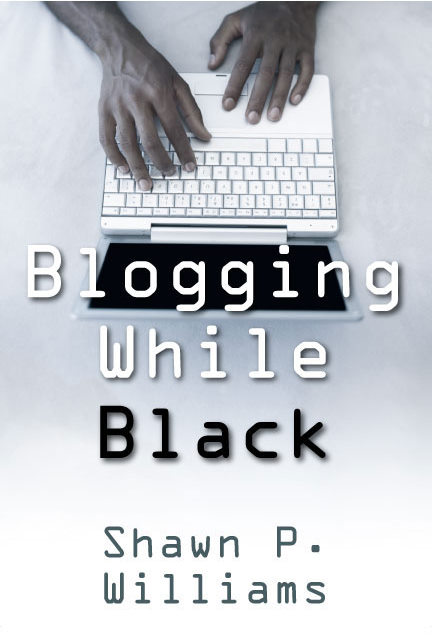
Blogging While Black

A little over three years ago I met Shawn Williams. It was an unlikely meeting. We were both attending the Democratic National Convention in Denver, Colorado. Blogging had taken off fairly recently and I had gotten sucked into reading several of the local blogs on a daily basis. Shawn's was one of those. As I walked down the streets of Denver, we bumped into a couple of guys who introduced themselves as bloggers with Dallas South. I immediately professed my dedication to reading their blog and as Shawn explains on page 104 of his book, we became fast friends.

We stayed in contact after returning from Denver. I was thrilled to be asked to be on the board of his new initiative, Dallas South News, and since then have been excited to see the release of his new book, Blogging While Black.


What is fascinating to me is how much things have changed in such little time. In 2008, while at the Democratic National Convention, Shawn and I were having conversations about how impressed we were about how cutting edge the Obama campaign was for welcoming and encouraging bloggers at the convention. Blogging was personal. It gave an intimate perspective and allowed information to spread that would have previously been swept under the rug by mainstream journalists. It provided connections.

These days everything moves fast. By the time you purchase the iPad 2, the iPad 3 is right behind it and outdating what you already have. New technology and new ideas are pushed out rapid-fire. It's hard to keep up with the many things whatever new piece of technology offers. Yet Shawn's book captures a moment in time that I haven't heard of anyone else capturing. He talks about what the blogosphere offered and how it allowed he and other common people to get the word out about important issues. His capitalization on this new tool allowed him (and others) to disperse important information and become a 2008 version of inspiring people to take action and become a type of civil rights movement. We became engaged in ways that hadn't seemed possible.

The other great thing about this book is that Shawn doesn't limit these possibilities to himself. The book provides a historical documentation of the blogging efforts challenged America to look at life differently but also provides sections and tips on how "U Can 2!"

I love documentaries and memoirs. Blogging While Black provides the kind of documentation that flows well and provides that historical context that makes me think, "Wow...that's what was happening three years ago??"

Pick it up at Amazon or see Shawn in person at some of the upcoming book signings. If you don't know him already, you'll really enjoy meeting him. 

Jokae’s Book Store & Framing
Saturday January 7, 2012 3-5 PM
3223 West Camp Wisdom Road, Dallas, TX

The Dallas Institute
Monday January 9, 2012 6:30-8:30 PM
2719 Routh Street  Dallas, TX

New Year Book Jubilee
Saturday January 28, 2012 11AM - 4 PM
Southwest Center Mall
3662 West Camp Wisdom Road, Dallas, Texas

Thursday, April 02, 2009

Acknowledging the work of César Chávez

It's not hard to figure out that we value the things that we know and are most familiar with. Unfortunately, it has not been until fairly recently that the contributions of people of color have been deemed important.

In 2009 we still live in a segregated society. Sometimes we don't even recognize how segregated we are. Look at your neighborhood. Count the people on your street who don't look like you. Go to church. Count the people at your church who don't look like you. (before you answer that you have diversity in your community or your church, let me clarify. Having one or two families does not count as diversity.).

It's not that people of color haven't contributed any knowledge to society. We simply don't recognize their contributions. Our history books and other text books are slowly getting better, but they, for the most part, credit the major contributions to White males.

In a blog post on March 29, I showed where technology is headed. At the end of the video, you can see the guy who created the amazing system. I'm guessing he's Indian-American. I have heard little about him or his amazing innovation, but much about Bill Gates. It's just the way we work.

All of that to say that it's good to see more people of color in leadership who will challenge us to recognize the efforts of so many others we have disregarded all of these years. So I thank Dr. Hinojosa for pledging to make March 31 a recognition day for and education day about César Chávez. I hope the rest of us will follow this lead and learn more about the depth of what he contributed to our country.

----------------------------------------------------------------


A Proud Day for Dallas...
Tuesday, March 31, 2009
By Alberto E. Ruiz


Starting today, Dallas ISD students will celebrate the legacy of one of our nation's great civil right leaders by learning about his important life's work. Julian Resendiz of Al Dia reported that César Chávez would no longer be a mystery for students in the 5th grade of Dallas public schools. "Every year on March 31st", stated Michael Hinojosa, DISD superintendant, "our young people will be given special lessons on service and learning through school curriculum." The entrenched superintendant added, "There are things that I can control and this is one of them." He told a crowd at the Latino Cultural Center during the Cesar Chavez Arts Tribute on Sunday.

"It was something that the community sugested. People came to us, some of our administrators studied it and said, 'Claro que sí, sí se puede hacer'", said Hinojosa. "It's a good recommendation and right on time, since we are celebrating his birthday."

While Dallas ISD plans to implement Chávez in it's curriculum, the Mayor and City Councilmembers proclaimed March 31st as César Chávez Day in the nation's 9th largest metropolitan area. The detailed proclamation was read by Councilmembers, Dr. Elba Garcia an Steve Salazar, during the event that the LCC. Dallas remains the only city out of the nation's top 10 without a major thoroughfare in honor of the civil rights icon.

A mass also took place at the Cathedral of Guadalupe on Saturday morning, which was followed by a march led by LULAC District 3 and the Dallas Peace Center. After arriving at the Farmer's Martket against a strong and cold wind, students and adults listened as Ft. Worth State Representative Lon Burnam stated, I'm not your representative but on behalf of your sister city to the west I want you to know that you deserve to be heard and to have the street that you desire for César Chávez."

Pondering the May elections for city council, the state of our economy and our nation's renewed trust in social justice advocates and unity coalitions. Indeed, it is a proud day in Dallas, where despite a heavy hand over the mouth of residents, together we shouted: Si se puede, Yes we can!

Below are details of the Tribute that took place on Sunday, March 29 at the Latino Cultural Center.

Sunday, January 25, 2009

The shift of January 20, 2009

Now that I've gotten back from the Inauguration and recovered from spending 74 (nearly consecutive) hours on a bus, I have recovered enough to reflect on my experience...and I realize the profundity of this moment in time.

On Inauguration Day, as we got off of the shuttle to head toward the Mall, we had no orientation of where we were or where we were going. It didn't matter. We had no choice but to move with the throng of people as we all shuffled toward what we could only assume was the right direction.

As we walked, the National Guard were posted every few feet, ensuring that we remained orderly and in the right direction. I couldn't help but think of the irony of that moment: Huge crowds of people were walking toward the inauguration of our first Black president. More government forces were on hand than ever before. The same forces that were inappropriately used by government officials to prevent the integration of our public institutions 52 years ago were now being used to protect. It was simultaneously a disturbing, yet comforting and joyous feeling for me.


On that day, I felt we had a new and hopeful beginning.

This beginning does not mean we are a "post-racial America," as some have suggested, nor does it mean that as of January 20, 2009 at 12:00 p.m. EST every Black child and every Black parent has "no more excuses" and will (or should) immediately be ideal parents and students as others have commented. It is not possible for change to happen with a snap of the fingers or an oath of office.

However, there is a feeling of change. And the great thing to me is that it is happening at the top and setting the tone. But what is even more important is that the tone that is being set at the top was chosen by us. As Barack Obama told us back in February, "We are the ones we've been waiting for. We are the change that we seek." (February 5, 2008)

We had to make the decision to no longer be a country where the national guard prevents instead of protects. We had to make the decision that people of all ethnicities have important insights to contribute to this country. We had to decide that we want to be a country of hope instead of fear. We elected a president who chooses to listen to people. We elected a person who values opinions.

We decided that.


Today, we are not perfect. We have a ways to go. But if we can continue to believe that "we" are the ones we've been waiting for and "we" are the change that we seek, then we have a bright and hopeful future, no matter what struggle comes our way. I am excited about that.

Tuesday, January 13, 2009

Martin Luther King, Jr. Day of Service

What is it with our country??

Last night my friend in Missouri expressed her frustration over going to the gym, as she regularly does. "I hate all of these New Year's Resolution people!" she grumbled. Because of the New Year's Resolution crowd (that only comes the first of the year), she couldn't do her regularly scheduled routine on the treadmill.

As we were talking, I realized that it's not just New Years...our whole society is about one-time events.

At Christmas, everyone wants to give to the poor.

At Easter, everyone wants to go to church.

At Spring Break, Christian colleges want to take groups to "serve."

At the After-School Academy, we get offers that people want to teach a one-time class.

And Monday will be Dr. Martin Luther King day, which has been proclaimed a National Day of Service.

Now I suppose that one-time giving or one-time exercising or one-time serving is better than nothing....and, who knows, perhaps for a few (one or two??) it results in a long-term dedication. But, let's be honest. We are a self-gratifying society. We do these one time events for ourselves...not for anyone else. And when we are focused on ourselves, it doesn't last.

Take exercise. New Year's resolution..."Lose 10 lbs." with the implied "...so I can look better" ...instead of "focus on my overall health for the benefit of myself and others who love me and want me around in 30 years."

Easter. "Attend church." (it relieves guilt, I suppose...but I don't think the intention is really about deepening a long-term faith)

Christmas. "Deliver gifts to the poor and teach my child how to give to the 'less fortunate'." (have you ever thought about what it sounds like if you were to knock on someone's door to say, "Hi, I wanted to deliver gifts to the poor. I wanted my son to see you so he could see how fortunate he is.")

MLK Day of Service. "Go to a rough neighborhood...preferably a street named after MLK...because it will more than likely be in a run-down area (which makes no sense at all to me, but that's a completely different topic) and offer to pick up trash or paint houses or something."

I'm sure I sound a little cynical, but let me be honest here. Being in the non-profit world, I've heard people get frustrated when their offers to do one-time service are turned down. The leader of the group or the church leader will say, "You've got to let people come and serve. That's how they begin donating. That's how to get them involved. They want to connect with people. Don't just give them administrative tasks."

I agree with connecting with people. But I know those leaders haven't been on my end. For one, in the last two-three months, I have had probably 15 or more people say they wanted to volunteer at our After-School Academy...and seemed truly excited about it. I have set up special orientations to accomodate them. Each time, maybe one person shows up to the orientation...and some of them don't return after the orientation. I know...a few is better than none...believe me, we recognize that, which is why we continue creating special orientation sessions. Secondly, allow the people who are there all of the time to be involved with the children. When people come in randomly to volunteer, it's like having grandma over for the day...and we're left to do damage control after she's gone. The kids are there all of the time. They need people there all of the time...not just once out of a year. So, if you don't plan on coming regularly, please be willing to do the administrative tasks that we don't have time to do because we're busy structuring and keeping programs running.

I guess it's just tiring. And I guess that's part of being in a non-profit where we have to be dependent on volunteers...and part of being in a society that has been taught self-gratification.

So, I guess as we move into the Martin Luther King Day of Service, I don't want to discourage anyone from serving. But I would challenge you to ask yourself, "Who is this benefitting?" and then think through what Martin Luther King, Jr. was all about. Wasn't he about efforts that took a much longer time and effort to accomplish...efforts that weren't about themselves, but about the good of the much larger community?

Civil Rights was about personal sacrifice. The Montgomery Bus Boycott ...the Selma to Montgomery march (please click here to watch John Lewis's moving account of crossing the Edmond Pettis bridge)...the effort to gain equality for the Memphis Sanitation workers...the freedom rides...the March on Washington. All were about long-term solutions...and all required time, effort, and personal sacrifice.

Martin Luther King, Jr. was about efforts that would result in systemic changes that benefitted people long term. How can we emulate that as we move forward in 2009?

Monday, December 29, 2008

The Price of Silence

On December 10, 1948 the General Assembly of the United Nations adopted and proclaimed the Universal Declaration of Human Rights.

The following 48 countries voted in favour of the Declaration: Afghanistan, Argentina, Australia, Belgium, Bolivia, Brazil, Burma, Canada, Chile, China, Colombia, Costa Rica, Cuba, Denmark, the Dominican Republic, Ecuador, Egypt, El Salvador, Ethiopia, France, Greece, Guatemala, Haiti, Iceland, India, Iran, Iraq, Lebanon, Liberia, Luxembourg, Mexico, Netherlands, New Zealand, Nicaragua, Norway, Pakistan, Panama, Paraguay, Peru, Philippines, Thailand, Sweden, Syria, Turkey, United Kingdom, United States, Uruguay, Venezuela. Eight abstained (all Soviet Bloc states [i.e., Byelorussia, Czechoslovakia, Poland, Ukraine, The USSR and Yugoslavia], South Africa, and Saudi Arabia).

Yet, as I read the Declaration, I wonder how much the countries who voted for the declaration actually take to heart the commitment they made 60 years ago. How do we create a renewed commitment to this...and what is the price of our silence?

Monday, October 27, 2008

Our world today: Progress and Resistance

As I sat grading Reflective Personal Development papers for the Multicultural Education course I teach, one of my friends called. The first words out of her mouth were, "My mom and I just voted! Outside of having my children, I have never felt something so liberating!!"

She went on to tell me how she had originally planned to vote tomorrow (her day off), but her dad called and said, "You need to come now! The lines aren't long and it's an amazing feeling!"

Yes, my friend is Black...and yes, her overwhelming excitement was because, for the first time in her life, she was able to walk into the voting booth and choose a Black man for the highest office in our land. But, just for the record, she is not voting for Obama solely because he is Black. We talked about how she likes Obama's healthcare plan...and desperately needs affordable healthcare for her children. She also believes that the Earned Income Tax Credit that Obama supports can help her and her family.

My neighbor, an older Black gentleman, also explained to me yesterday that he could now go to his grave because of this monumental moment. He talked about the segregated entrances and water fountains he used to experience and explained how he never thought he'd see this day. He went on to say that he had hopes that this would open up the field for Native American, Asian, and Hispanic candidates in the near future.

And just for the record...for those who still may be thinking that Black people are only voting for Obama because he's black...the majority of Black people have traditionally voted for the democratic platform...which has meant voting for White men. Obama being a democrat probably has more to do with them voting for him than because he is Black. Otherwise, Alan Keyes (R) or Jesse Jackson (D) would have won.

As my friend talked, I got chills. This moment obviously meant a LOT to her.

I hung up the phone and went back to grading the reflective development papers, which challenge the students to think about ethnic and racial experiences and how those experiences have impacted them. Ironically, the paper I was grading was a very open and honest account of negative past experiences related to race and negative present feelings about mixing cultural groups. The hurt and anger from those past experiences were apparent and had led this particular student to be content with admitted closed-mindedness.

After the phone call, I was excited about the possibilities of our future. But grading the paper, I was sad knowing that we still have much very challenging and difficult work to do to dispel stereotypes and create trust amongst people.

Our country is changing. We are moving toward acknowledging the diversity of our great nation. We are hopefully moving toward inclusivity in a way that Brown v. Board didn't accomplish. At the same time, though, we still have people who believe people of different cultures and ethnicities are too different and that assimilation and conforming should be the solution.

Some of the most hardened segregationists have admitted they were wrong for their actions in the 60s. I have hopes that the remnants of people who have fears about a Black man becoming president and people who believe that multiculturalism should be equal to assimilation will one day in the near future recognize the value that each person has to offer our great nation.

Saturday, October 11, 2008

Are we ready to move to the next level of race relations?


John Lewis, Rep. (D-Ga.):
As one who was a victim of violence and hate during the height of the Civil Rights Movement, I am deeply disturbed by the negative tone of the McCain-Palin campaign. What I am seeing reminds me too much of another destructive period in American history. Sen. McCain and Gov. Palin are sowing the seeds of hatred and division, and there is no need for this hostility in our political discourse.

During another period, in the not too distant past, there was a governor of the state of Alabama named George Wallace who also became a presidential candidate. George Wallace never threw a bomb. He never fired a gun, but he created the climate and the conditions that encouraged vicious attacks against innocent Americans who were simply trying to exercise their constitutional rights. Because of this atmosphere of hate, four little girls were killed on Sunday morning when a church was bombed in Birmingham, Alabama.

As public figures with the power to influence and persuade, Sen. McCain and Gov. Palin are playing with fire, and if they are not careful, that fire will consume us all. They are playing a very dangerous game that disregards the value of the political process and cheapens our entire democracy. We can do better. The American people deserve better.

John Lewis has always been a hero of mine. I admire his wisdom, his work, and his perseverance during the Civil Rights movement. In my mind, he was a more important person than he gets credit for in many history books.

Though it may mean little for me to say that John McCain and Sarah Palin are stepping over a line, creating unfounded fears and provoking untruths, John Lewis lived through the climax of racial tensions, fear, and hatred. He experienced the results of fear-filled people who were provoked by strong voices in our country.

In 2008 we have come to a new turning point in our country. We are experiencing a new era that is leading us to deal with our prejudices and discrimination head on--whether it's women, African-Americans, Muslims, Mexicans, spanish-speakers, gays/lesbians, and a number of other cultural groups.

As happened in the 60s, the current culture clash is leading us to show our colors.

I have hope that, like the 60s, these confrontations will ultimately propel us on to the next level. I pray that as we work toward that next level, however, we will not have to go through the same tragedies in order for us to realize how ridiculous our fears and actions were.

Friday, September 05, 2008

Know your voter rights!...and know where to access resources!

I attended an event this evening called, "It's my vote. Make it count!" and found out some interesting information you might find useful no matter where you are in the United States. They informed us about different sites and phone numbers that can help make sure our vote counts on November 4.

Did you know that the #1 problem in getting out the vote is that people don't know their poll location?? There are some ways to make finding out easy. Go to Vote411.org. All you have to do is select your state and type in your address.

Did you know that if you cast a provisional ballot at one polling place, but are actually registered for a different polling place, your vote will not count. Last election, 700 votes in Dallas County were lost because of this. It is important that we know, and help others know, their correct polling place!

If you live in Dallas County (in Dallas, Texas), you can go to Dallas County Elections. They have all kinds of great information about voting on the right hand column of their website. They would also LOVE to have more volunteers for November 4. Contact Bruce Sherbet, Elections Administrator, directly at 2377 North Stemmons Frwy, Suite 820 Dallas, TX 75207 (214) 637-7937.

You can find out your voter rights at http://www.votexas.org/.
For example, as a registered voter in Texas, you have the right to:
  1. A ballot with written instructions on how to cast the ballot.
  2. Cast your vote in secret and free from intimidation.
  3. Receive up to two more ballots if you make a mistake while marking the ballot.
  4. Ask the polling place official for instructions on how to cast the ballot (but not for suggestions on how to vote).
  5. Bring an interpreter to assist you as you qualify to vote if you do not understand the English language.
  6. Help to cast your ballot if you cannot write, see the ballot, or understand the language in which it is written.
  7. Bring written materials into the voting booth to assist you as you cast your ballot.
  8. Report a possible voting rights abuse to the Secretary of State (1.800.252.8683) or to your local election official.
  9. Cast a provisional ballot if your name does not appear on the list of registered voters or you do not have proper identification.
  10. Vote once at any early voting location during the early voting period within the territory conducting the election.
  11. File an administrative complaint with the Secretary of State concerning violations of federal and state voting procedures.
Finally, in our world of cell phones, what may be the easiest is to simply program in 1-866-myvote1 (1-866-698-6831).

This number can be used before the election to register to vote. Simply call the number, follow the directions to register, and they will send an application straight to your home. One of their suggestions was to carry around a cell phone and, when meeting people, simply hand them the cell phone to provide their information and register.

This number can also be used during the election to call in immediately while at the polls if there is any problem. The 60-second message you leave will be recorded and listened to almost immediately. As the messages are recorded, they are able to pinpoint where the major problems occur and get people to begin addressing those situations.

What are some things you can call in about?
  • Running out of ballots at your polling location
  • Lines being too long
  • Intimidation
  • Feeling like something's wrong
We do have rights. But it's important to know what those rights are...get the word out to others...and know how to easily access the resources that help ensure those rights.

Pass it on!

Tuesday, August 26, 2008

It can't possibly get better!!

When the alarm went off at 5:30 a.m., my body had a really hard time shaking out of such a deep sleep. I was exhausted from all of the happenings last night! I checked the calendar and decided to go to some Civil Rights award event. I checked out the map. After kind of figuring things out Sunday and yesterday, it seemed do-able. I didn't have a ticket, but I hadn't yet made the connection with Pam to give up my press credentials so I thought I might have a chance.

Sure enough, as I walked up to the press table outside of the restaurant, a man quickly came over..."Are you press?" "Yes," I replied. "Right this way." And he quickly ushered me to the front of the restaurant and explained where the program would be taking place.

Learning my lesson from not getting coffee in my body yesterday, I tried to do gulp my Starbucks as fast as I could. I saw the crowd of people inching in (I've learned that's a sign of important people). I put down the Starbucks, grabbed the camera and started shooting. Al Sharpton was walking in. I was informed later that the lady he walked over to was Spike Lee's wife! But that was just the beginning!

A very pretty lady walked in and, for the life of me, I couldn't figure out who it was. (I don't remember names of movie stars very well). I finally admitted my ignorance to a lady...and felt even more ignorant after the admission...It was ANGELA BASSETT!!!!

The event began with...wouldn't you know...my hero again...John Lewis!...giving an opening talk. Then, Pras Michel from the Fugees introduced his documentary film, Skid Row, bringing attention to homelessness by his being homeless on skid row for 9 days.

But the best part for me was watching the Civil Rights awards. I have put so much time and effort into studying the Civil Rights movement that it makes me emotional every time I stand in the presence of these great leaders who have gotten us to this point of our history. Martin Luther King, Jr. introduced them. As these older women spoke, I was overcome with emotion (but I didn't cry...I was the "press" and had to do my job!). Dorothy Height, Doris Crenshaw, and Rev. Willie Barrow (with the Rainbow Coalition) spoke words of wisdom. I want to be like Rev. Barrow when I grow up. She has made it possible for kids to go to college because of her persistence with them and the institutions. She claims 65 god-children who contact her on a regular basis.


And before it was all over, Spike Lee walked in!

As I left the restaurant, I got caught in some motorcade where secret service blocked off the street. I can only speculate it must've been Bill or Hillary. (if they won't tell us...which none of the police would...then I can at least speculate on who I saw! :) ).

I made my way back to the Big Tent so I could eat and blog...and wouldn't you know, I found my moment with Dan Rather!

We moved real quick to the Blogger BBQ...with me in hopes of getting a picture of Howard Dean. Before we could get to Howard, I saw Ann Curry and Anderson Cooper. Unfortunately, I could only get close up shots...but none with me in them. Oh well. I've still got tomorrow.

You know how those restaurants have their walls full of the people who have come to eat there? I think I may have to do that and have my own wall of fame at my house!

Monday, August 11, 2008

Generational race issues today

An interesting article in the New York Times provided some food for thought about the many different perspectives related to race and politics.

The young...the old. We each have different experiences.

Do we transcend race issues or do we embrace them and deal with them head on?

If you follow race issues, the younger generation, in general, is presented as devaluing what has happened in the past. We didn't grow up in the Civil Rights Era. We didn't participate in the violence, nor were we the recipients of being beaten for the sake of freedom. We don't understand what that was like and, thus don't revere that experience (for lack of a better word) as much as we should.

What many of us don't realize is the Civil Rights happenings aren't that far removed from many people and the wounds are still open and tender.

As I watched the documentary, Little Rock Central: 50 Years Later, I watched MinniJean Brown-Trickey (one of the original "Little Rock Nine") get choked up and emotional as she walked up to Central 50 years after she had helped integrate it. The pain from the verbal and physical abuse she endured is still as real to her today as it was 50 years ago.

As I watched CNN's Black in America, I watched another man (probably in his 50s or early 60s) react the same way when asked to recall his childhood. The hurt from inhumane atrocities do not just go away.

But I also think about some of these Civil Rights era leaders who have charged that Barack Obama, and other young African-American leaders for that matter, "aren't Black enough" because they are working to transcend and move beyond race. The new leaders want people to see them as good candidates...good leaders, not good *black* candidates or good *black* leaders.

Isn't that what the Civil Rights leaders fought for...for people to see everyone as people? Isn't it because of the struggle and sacrifice of our Civil Rights era leaders that we are to this point in our history in the first place? Should we continue trying to hold on to the past...or is there a new current we should be embracing?

Just to be clear...I think we owe it to our elders and leaders of the past to never forget history and never forget what they endured. I also think we have to recognize that race issues have not disappeared. Race issues are still very prevalent in our society, despite what many want to admit. But, at the same time, maybe we need do to consider that a new conversation is relevant for this generation.

I, too, get frustrated when it seems we have written off the older leaders and their approach. I don't think that people of color should have to "assimilate" or ignore their culture and their experiences in order to be seen as great leaders. I think the new conversation and the new era we enter needs to acknowledge and learn from the past...recognize and own up to the issues of the present...and create conversations and enact change that will allow us to have an even more equitable future.

Click on the title of this post. Read the article. I'd like to hear your reactions.

Friday, July 25, 2008

What can we learn from young people?

Several years ago I used to host a "Civil Rights night" at my house. Teenagers would come over and we would watch documentaries like Eyes on the Prize and Chicano! (though Chicano! is no longer available, Teaching Tolerance will have a new Viva la Causa! video released in September). After watching the documentaries, we would have honest discussions about racism and struggle--then and now. I was always amazed at the depth of their thoughts and discussion.

As I was looking back through some old files, I found the following poems they wrote one night:


Immigration

People sometimes call me names
like immigrant.
I always respond with
ignorant.
I don’t know why, how what
I just go off
I see you looking
but am here to stay
am not leaving
instead am living here
and I plan to stay.

By: Nazareth Vidal, 4/28/05

------------------------------------------------------------------

What did I do wrong?

As I sit in the house wondering why? Feeling like I’m bout 2 cry. I think 2 myself what did I do wrong? As I think about the past instead of the future and traumatizing memories floating around my head I wonder…what did I do wrong? I try 2 think of the good but not the bad but the more I think of it I wonder why? Is it me? Or you? And as I think so hard I wonder…what did I do wrong? As I sleep I dream of what the next day has in store 4 me but I try 2 get the harsh moments out of my brain and as I wake up confused I ask myself…what did I do wrong? Now things aren’t the same I think the positive and search 4 good things and now I don’t ask what I did wrong…I know what I did right and nothings wrong about that.

By: Twasanna Lewis

--------------------------------------------------------------------

Black History

Africa
Strange people
Chains
Ships
Long journey
New land
Work for free
Beaten
Sold
Escape
Emancipation of proclamation
Free
Not knowing what to do
Trying to make a better life
Being oppressed
Different standards
Unequality
Segregation
Standing up for rights
Civil Rights Act of 65
Same opportunity
Society improving
Able to sit in a room with Janet and Rachel

By: Adrian Williams

-----------------------------------------------------------------------------

Civil Rights
Let freedom ring…let freedom ring…thank God Almighty…let freedom ring
Black Dignity Struggle
Freedom is like a bird
Courage Endurance Faith
Strength of heart
Bravery Perseverance Sacrifice
Fighting for your rights
Equality Leaders Senators
We’re not going to give up
Violence Pain Suffering
. . . . .
Patience
. . . . .
Amendments
. . . . .
Changing the law…changing minds

By: Rachel Embry, Twasanna Lewis, Adrian Williams, Albert Ross, Nazareth Vidal, Janet Morrison, Raphael Bienavides

----------------------------------------------------------

The voices of young people are powerful.

They have so much to tell us if we choose to listen.


.

Sunday, July 20, 2008

Guilty...until proven innocent

Think about the last 27 years.

If you're my age, that's the majority of your life. In my younger years, we used to talk about the changes our grandparents had seen over their lifetime. But, truly, the last 27 years have been no less amazing.

We now have cell phones...3-D video games...high speed (and small) computers and laptops...ipods...Internet...email...and those are just the technology advancements.

Along with all of the new technology, of course, jobs have changed as well. Even jobs at fast food restaurants require a basic knowledge of technology. What you have to know in order to get a job is very different than it was 27 years ago.

Imagine being frozen in time for those 27 years. What do you do when you wake up today? What kind of clothes do you wear? How do you quickly acquire new job skills in order to work and survive? If you knew anything about computers at the time, they were probably large main frame computers that filled an entire room. How do you learn to function in a world that most jobs require online submission of resumes and applications? How do you even know where you're going...since major land development has restructured the entire landscape since you were last familiar with it?

Some people are in that very situation.

James Woodard served 27 years of time in prison for a murder charge...a crime he didn't commit.

Billy Smith served 19 years for sexual assault...a crime he didn't commit.

Charles Chapman was misidentified in a photo lineup and served 27 years for rape...a crime he didn't commit.

How can I be so sure? Because DNA evidence cleared them.

In Dallas County, DNA evidence has cleared these three men, along with 15 others. The Innocence Project, Dallas DA Craig Watkins, and Dallas Judge John Creuzot are working tirelessly to reclaim fairness and justice in our "justice" system.

So far in Texas 33 people have been exonerated on account of DNA evidence...a total of 427 years of innocent time served!!

How did this happen?
  • 82% were misidentified (supposed eye witness accounts)
  • 18% convicted on false forensic testimony
  • 15% convicted on "snitch" testimony
  • 9% gave false confessions to reduce their time
  • I didn't catch the percentage, but others were simply prosecutorial misconduct (despite our "justice" system)
Finally, there are people in office who are listening. Finally, there are people in office who recognize that our system isn't always "just" to everyone. But more than that...they are not just listening. They are using their position in our goverment to create change...to create fairness.

Saturday evening, Texas Congresswoman Eddie Bernice Johnson convened a panel including Chairman of the House John Conyers, Houston Senator Rodney Ellis, DA Craig Watkins, co-founder of the Innocence Project, Jeff Blackburn, and the exonerees.

Part of their purpose was to listen. They wanted to know, "Where do we start? How do we dig in?" ...and they wanted to hear from people who had been directly affected.

Several spoke about moving our prison system from a punishment system to a restoration system with one person explaining..."because they will be out eventually."

Judge Creuzot brought up the fact that we need a process that will allow formerly incarcerated individuals to move on once they are released. (currently, convicted felons who have already served their time have little ability to get jobs or even find places to live...yet we expect them to come out and be productive members of society and are irritated when they aren't...without realizing why).

An attorney thought it was necessary and crucial that our system begin to fund well-paid, criminal defense, court-appointed attorneys due to the fact that low-income people are many times provided with the least competent attorneys (since more capable attorneys want to profit from their expertise).

In combination with that, others talked about the need for federal mandates to fix the system because we don't have the will to do it on our own.

Evidently some people are angered by the efforts to reform the system. Evidently, it sounds better when prosecutors, judges, and politicians talk about being "tough on crime"--the more convinctions, the better we feel. However, it's also important to realize that for every wrongful conviction, the real criminal goes free.

This is an issue that affects all of us...not just in Texas. Dallas happens to have kept more evidence over the years than most places...which has now allowed for 18 wrongful convictions (to date) to be overturned based on the evidence. Other states and counties have not been immune to these wrongful convictions...but may not have the evidence needed to overturn the cases as readily.

This is an issue we would all be better for if we educated ourselves and got involved. Unfortunately, most of the cases are having to be re-opened by people outside of the system. The lack of will of our political system, at this point, has not provided the funds, despite the mistakes made.

If you would like to help this effort continue, donate to The Innocence Project, write your congressperson, and do what you can to help fix the system.

Friday, May 30, 2008

Blaming the victim

As I'm sitting in my office at Turner Courts, I see this huge truck with a trailer holding some equipment attached...a backhoe maybe??

It made me think about the crime report statistics I read this morning: "STOLEN VEH RAN INTO TRANSFORMER IN GRASSY COMMON AREA OF APTS."

As I watched the truck park and get ready to unload, I thought of how much it costs to bring in big equipment to fix all of the things that knuckleheads decide to damage...at no expense to themselves. I thought about how it's no wonder DHA (Dallas Housing Authority) and the city gets frustrated with our requests to fix things only to have them broken again.

I then had to adjust my thinking.

If a criminal drives a stolen car into any other neighborhood, we don't blame the neighborhood for that problem. If someone does something wrong in any other neighborhood, the neighborhood is seen as the victim, the criminal is treated as the bad guy, and the problem is fixed in order to keep the community in good condition.

So why do low-income neighborhoods get treated as if they were the ones to blame for the crime that happens?

Monday, October 22, 2007

No more nooses

Everyone I know agrees that racism is wrong. We express our incredulity when something overtly racist happens.

However, what I keep noticing is that it never seems to be skinheads or KKK members who commit these horrendous acts. It's always the average "Joe"...people who could be (and probably are) our next door neighbors, our relatives, our friends.

The Jena 6 incident has become the latest, most widely publicized display of racism. Nooses were hung from a tree to send a message that it was a "Whites only" tree. I've heard differing stories as people argue why it happened, who did it, who should be punished, and how. But the bottom line is that nooses were hung. A non-verbal message was sent out to the community. It doesn't take a rocket scientist to figure out what that message was. Just the other day I read another article about a noose being hung on a black professor's door. Noose on Door at Columbia Prompts Campus Protest .

I think we give ourselves too much credit when we think that we (or other people we know) don't participate in racist, sexist, homophobic, et al, behavior. If we really examine what we say or what's being said around us, what are we saying...what are we doing...that covertly encourages this kind of behavior? What do our words, actions, and attitudes say to our children and the other people around us?

I heard a story once that talked about life and racism being like a people mover (you know...the conveyor belt things in the airport to get you from point A to point B without a lot of walking). Our society is like standing on a people mover. Though we may not be actively walking with it, if we're standing on it and not intentionally walking backward against it, we are still moving with it. I think that's hard for us to accept. We want to think if we are not walking with the crowd, we show that we are against it. Unfortunately, that's not true. The people mover takes us right along and moves us with the current.

It takes a lot of effort and energy to walk in reverse on a people mover. Similarly, it takes a lot of effort and energy to work against racism...sexism...homophobia...classism...et al. How much effort and energy are we willing to put toward walking backward through the crowd?

Sunday, April 15, 2007

Robinson and Stackhouse...#42


Jerry Stackhouse, on the Dallas Mavericks, is #42. I never knew why. Evidently, he's always worn #42 because it was Jackie Robinson's number. Stackhouse recognizes that Robinson paved the way for other people of color in all sports. So many people don't take time to know about our history and know why things are the way they are. Stackhouse wants to always remember.

Today, on Jackie Robinson Day (the 60 year anniversary of Robinson breaking baseball's color barrier), Stackhouse asked the NBA if they would allow him to use "Robinson" in place of "Stackhouse" on his jersey. They denied him that opportunity. Not wanting to lose the opportunity to honor Robinson, Stackhouse wrote JACKIE ROBINSON on the outside of each of his sneakers.

Thank you, Jackie Robinson, for having the amazing courage to endure what you did.

Thank you, Jerry Stackhouse, for honoring that memory and reminding the rest of us.

Monday, July 17, 2006

Not even on the map

Our Urban Experience (UE) program started today (see the link at right for more info). I had asked several of the teenagers that I've known for a while to help me out. I had asked them to be on a panel and talk about some of their experiences at school and such. They always amaze me with their wisdom and insight.

In the packet I gave each UE participant, I had included a map of the city, provided by our local tourism office. When it came time for Lewanna to talk about her neighborhood, she pointed out that the map we had passed out didn't have Southwest Center Mall on it--the mall in her neighborhood (a mall known to be in a predominantly Black neighborhood and frequented by Black customers). She questioned the neglect of putting the mall on the tourism map, yet the city claims that the mall isn't frequented and needs to be torn down. She wondered aloud how a mall could attract customers without any kind of publicity.

It was interesting to hear her musings. I hadn't even looked at the map. I had, however, noticed the same thing when I was in Atlanta last year. Their tourist map had four days worth of sight-seeing options listed in the margin; yet, though Atlanta was one of the hubs of the Civil Rights movement, and though Martin Luther King, Jr.'s Ebenezer Baptist Church and his birthplace is there, nothing related to Martin Luther King, Jr. or the Civil Rights movement was listed as something worth seeing.

When people are left out, they notice. If we're perceptive enough, we'll notice, too.

Monday, June 26, 2006

From Misery to Hope

Below is a poem that the teens and adults in our Civil Rights night created last year. The statements were made by Black and Hispanic teenagers, as well as a few of them made by a couple of adults. The words seem very fitting and poignant these days considering what has happened in the last week.


MISERY…

Misery is when black people don’t trust my motives and white people misunderstand them.

Misery is having to ask an African-American not to use the “n-word.”

Misery is when white people torture a black person.

Misery is when white people think all black people are ghetto.

Misery is when smart minorities choose to throw away their future.

Misery is when you go to South or West Dallas.

Misery is when you have to be in a class where your teacher is racist.

Misery is when people say I’m going to be nothing in life.

Misery is when you have to wait for someone to go get a “Spanish speaker” to assist you when you don’t need one.

Misery is when black people do black on black crime.

Misery is when a white person is scared to go to the black neighborhoods.

Misery is when black people hate their color so much they want to be white.

Misery is when people say, “Immigrants are invading the country.”

BUT…I have hope!

I have hope when my neighbors and I eat bar-b-que together and they show me how to make greens.

I have hope when I can go to church and get a hug from African-American, Hispanic and White friends.

I have hope when I see young black people who are serious about their education.

I have hope when the church not only cares but brings programs to help the community.

I have hope when I see people making a change for the better.

I have hope when immigrants aren’t ashamed of saying, “I am an immigrant.”

I have hope when other teachers tell me I have big opportunities ahead of me.

I have hope when I see a black person succeed.

I have hope when I hear of someone who started at the bottom reaches the top.

I have hope when I see someone in an abusive relationship make it.

I have hope when I see different cultures and backgrounds bonding together.

I have hope when I see younger people trying to be role models for their younger brothers and sisters.

We are from…fast food…fast kids…traffic on the highways…drug traffic in the streets…Texas heat…glazed doughnuts to chocolate doughnuts…sandboxes to mudpies…hard times…people doing hard time…bluegrass…hip-hop…sinners…repenters…no respect…respect.

We are from different backgrounds but we are all trying to make a change.

We are from Misery to Hope.

Sunday, June 25, 2006

Inequity

I read an article in the New York Times about schools that are attempting to use race and socioeconomic level as a factor in student assignments to schools in order to ensure their schools maintain socioeconomic and ethnic diversity. Their goals are admirable. I would love to know that every school has an economically and ethnically diverse population.

However, because of this intentional practice, the Supreme Court is now looking into the legality of using race as a criteria in school assignments. For some reason, people think that the days of needing desegregation orders are over. I don't know if they noticed, but our schools are more segregated now than they have been since the 1970's! For more factual information on that, look up Jonathan Kozol's latest book, The Shame of the Nation: The Restoration of Apartheid Schooling in America or check out Gary Orfield, Professor of Education and Social Policy at Harvard and co-founder of the Civil Rights Project.

We no longer see desegregation as a priority, yet each time a law is passed saying desegregation is no longer needed, we segregate a little bit more. You can see it in the decrease in minority enrollments in colleges.

I have read that the Civil Rights Movement strove to be about equality, but ended up being about integration. There is a difference. Integration allowed middle class Blacks to move out. Equality would have produced schools and neighborhoods that made people wanted to move in.

We need equality, not integration! Schools still suffer from inequality. Though the schools mentioned above that are striving for a ethnic and economic balance should be praised for their intentionality, it is almost always the Black and Hispanic children who are bussed out. Why doesn't the effort go both ways? Why aren't White children bussed in?

For one, I know that White (and other ethnicities, for that matter) parents in the suburbs would fight that tooth and nail. I have read about it happening. They don't think it's fair that their children have to be bussed. Besides, they don't want their children going to inadequate schools.

Why do we think it is any different for kids and parents in the inner cities? Do we think that parents in the inner city want their kids to take a long bus ride every day to school? Do the kids or the parents want to attend schools outside of their neighborhood? Do they want their children attending inadquate schools? I would guess I could survey 100 parents in the inner city and all of them would say NO! So why do we make the rules different for them?